

What is Backtracking?
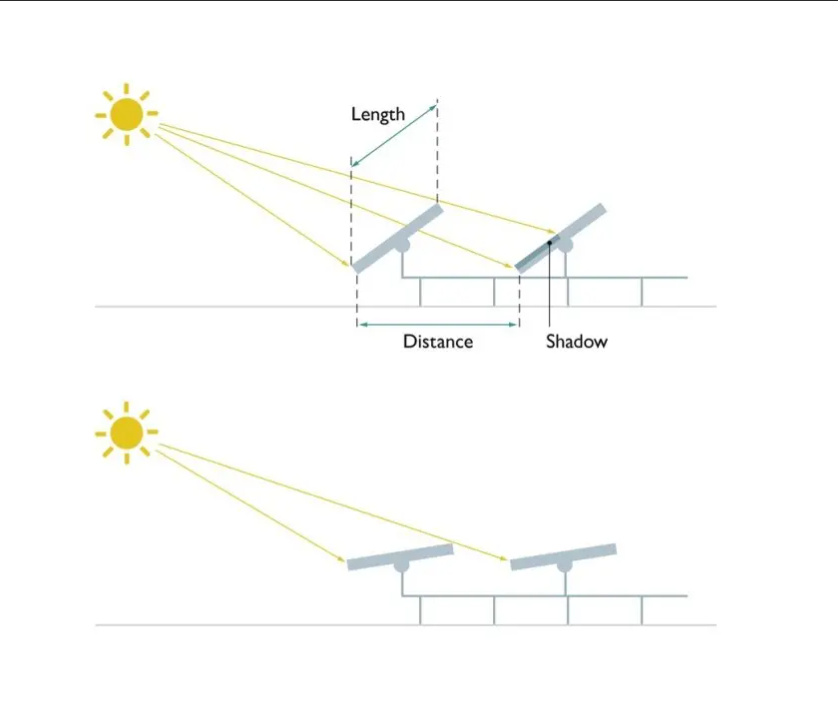
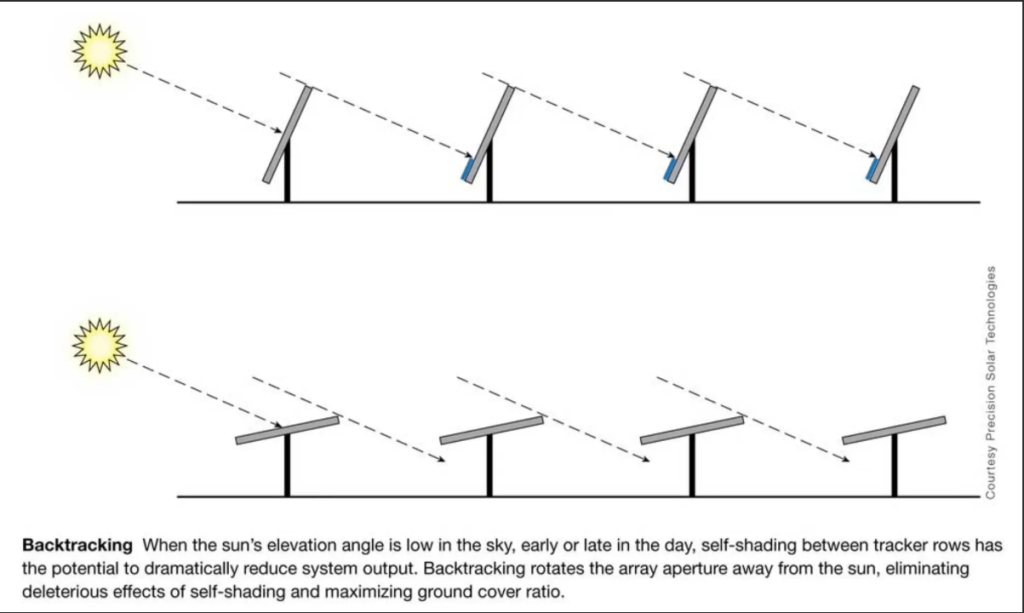
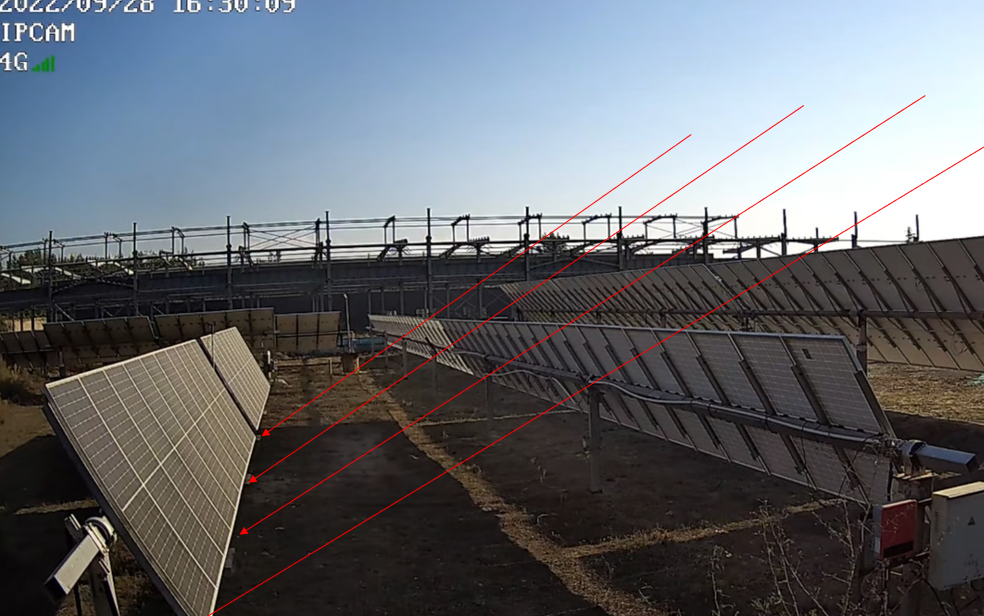
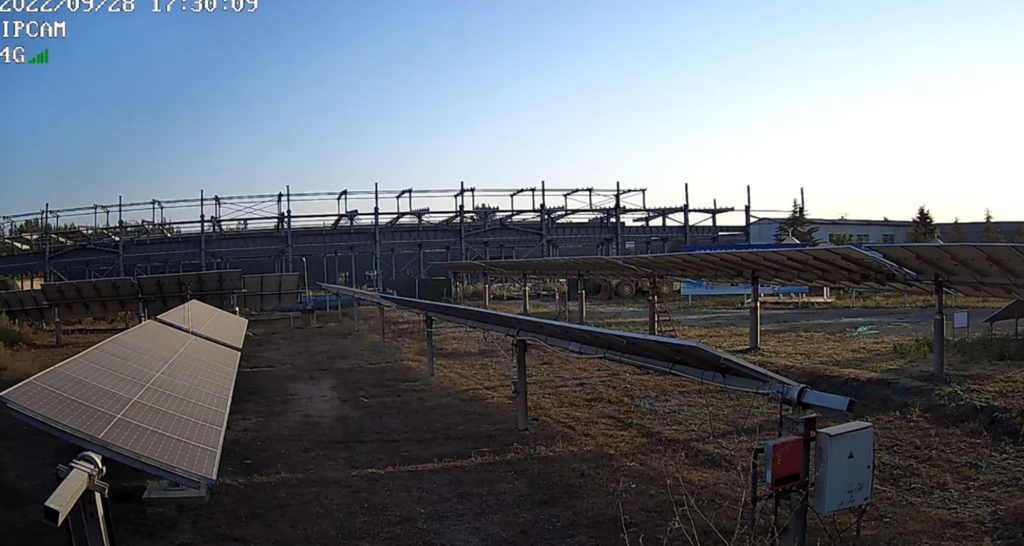
Backtracking is a control strategy used in solar tracking systems to avoid row-to-row shading during low sun angles (early morning and late afternoon). Instead of pointing modules directly at the sun, the tracker intentionally tilts slightly away so that the front row no longer casts shadows on the next row. This small angle adjustment often increases total energy yield because it prevents large shading losses that more than offset the imperfect sun-facing angle.
How a Tracking Controller Performs Backtracking
Modern tracker controllers compute backtracking decisions from a mix of inputs:
- Solar position (azimuth and elevation) — astronomical algorithms.
- Tracker geometry — row spacing, module width, standoff height.
- Site slope and terrain variations.
- Real-time or historical shading and performance data (when available).
The controller continuously evaluates whether normal tracking or backtracking yields more energy and switches modes accordingly.
Two Common Backtracking Algorithms
1. Standard Backtracking (Flat Terrain)
Uses geometric formulas to detect potential shading and adjusts tilt angles to eliminate it. This is effective for large, flat utility sites where row geometry is uniform.
2. Slope-Aware Backtracking (Uneven Terrain)
Integrates slope compensation so each row adjusts independently on hilly or rolling land. Slope-aware algorithms are vital when terrain changes would otherwise create shadows even with standard backtracking.
Why Backtracking Matters
- Higher energy yield: Prevents shading-related losses that reduce string output and inverter performance.
- Lower LCOE: More energy from the same installed capacity reduces cost per kWh.
- Better real-world performance: Improves generation during sunrise and sunset windows.
- Enables denser layouts: Allows tighter row spacing (higher GCR) without large shading penalties.
Where Backtracking Is Widely Used
Common applications include:
- Utility-scale single-axis trackers (1P, 2P)
- Sites with narrow ground coverage ratio (GCR)
- Hilly or sloped solar farms using slope-aware tracking
- Any large-scale projects where land optimization and yield matter
Our Controller’s Backtracking Features
Many modern TCUs include a combination of the following to maximize site yield:
- High-precision astronomical positioning
- Standard and slope-aware backtracking modes
- Real-time position correction and diagnostics
- Extreme-weather protection modes (wind, snow)
Replace this section with your product name and specific technical claims for product pages.
Conclusion
Backtracking is a simple but powerful strategy that increases plant energy output by preventing shading during low-sun periods. Choosing a tracker controller with robust backtracking (and slope-awareness when needed) is a high-impact decision for developers and EPCs aiming to maximize yield and lower LCOE.