Email:info@goodfuturesolar.com
Tel: +86-371-63966669
Email:info@goodfuturesolar.com
Tel: +86-371-63966669
These algorithms originate from astronomy and offer extremely high accuracy (arcsecond level). They are mainly used in scientific research, satellite tracking, meteorology, and precision photovoltaic (PV) control. However, their computational load is heavy, making them less suitable for embedded controllers.
| Algorithm | Institution / Author | Accuracy | Features | Applications |
|---|---|---|---|---|
| SPA (Solar Position Algorithm) | NREL, U.S. National Renewable Energy Laboratory, Reda & Andreas, 2008 | ±0.0003° (~1.1 arcsec) | Most authoritative algorithm; includes precession, nutation, aberration, and atmospheric corrections | High-end PV tracker controllers, irradiance calibration |
| Grena Algorithm (2012) | Grena, Solar Energy 2012 | ±0.01° | Accuracy close to SPA, but faster | Tracker control, simulation |
| NOAA Algorithm | U.S. National Oceanic and Atmospheric Administration | ±0.01° | Publicly available source code, easy to integrate | General control and meteorological systems |
| Michalsky Algorithm | Michalsky, 1988 | ±0.02° | Simplified astronomical model | Legacy tracking systems, research reference |
| Meeus Algorithm | Jean Meeus, Astronomical Algorithms (1991) | ±0.001° | General astronomical ephemeris algorithm | High-precision systems, time ephemeris software |
| PSA (Photovoltaic Solar Algorithm) | Commonly used in IEC standards | ±0.02° | Industrial-grade simplified model | PV controllers |
| ESRA (European Solar Radiation Atlas) | ESRA Team | ±0.02° | European standard for building and PV design | PV and building simulation |
These algorithms trade some accuracy (±0.05°–0.2°) for much faster computation and lower power consumption, making them ideal for MCUs, PLCs, and DSPs. They are the most widely used in the PV industry today.
| Algorithm | Author / Source | Accuracy | Description |
|---|---|---|---|
| Bourges Algorithm (1985) | B. Bourges | ±0.03° | Empirical Fourier expansion for solar declination (δ) |
| Wang Algorithm / Operator Method (1989) | Wang Chunhua (Chinese Meteorological Society) | ±0.05° | Empirical operator method for δ, hour angle (H), azimuth (A), and altitude (h) |
| Cooper Algorithm (1969) | Cooper | ±0.1° | Classic sine-based model; foundation for many later methods |
| Iqbal Model (1983) | Iqbal, An Introduction to Solar Radiation | ±0.05° | Used mainly for irradiance models but includes geometric computation |
| Duffie–Beckman Algorithm (1991) | Duffie & Beckman | ±0.1° | Widely used in thermal energy systems and embedded PV controllers |
| Kasten–Young (1989) | Kasten & Young | ±0.1° | Empirical relation for solar altitude |
| Gueymard Algorithm (2001) | Gueymard | ±0.02° | Lightweight irradiance model with geometric accuracy |
| Nann & Riordan (1991) | Nann & Riordan | ±0.05° | Used in PV performance simulation (early PVsyst versions) |
Many commercial PV tracker manufacturers (e.g., NEXTracker, Array Technologies, Soltec, Good Future, TrinaTracker, Huawei, etc.) develop proprietary “control-level astronomical algorithms”. Typically, they combine several techniques:
| Manufacturer | Algorithm Strategy | Features |
|---|---|---|
| NEXTracker (USA) | NOAA + Grena hybrid | Balance between precision and responsiveness |
| Array Technologies (USA) | Bourges + Wang Operator Method | Stable, anti-interference, ideal for large-scale arrays |
| Soltec (Spain) | Grena + empirical calibration | High accuracy, suited for bifacial PV |
| TrinaTracker / Huawei Tracker | Simplified SPA + real-time light sensor correction | Self-correcting high-precision system |
| Good Future / Chinese Controllers | Bourges + Wang hybrid | Efficient embedded algorithm, error < ±0.05° |
Combination 1: Bourges + Wang Operator Method (Classic Model)
Combination 2: Grena + NOAA Correction
Combination 3: Simplified SPA
| Application Scenario | Recommended Algorithm | Accuracy | Notes |
|---|---|---|---|
| Real-time PV tracking (MCU) | Bourges + Wang | ±0.05° | Fast, stable |
| PV simulation / high-latitude use | Grena / NOAA | ±0.02° | Requires higher processing power |
| Sensor-assisted control (light or tilt feedback) | Wang Operator + Sensor Feedback | ±0.1° | Redundant safety design |
| Research / solar path analysis | SPA / Meeus | ±0.001° | Highest accuracy, slower computation |
| Accuracy | Algorithm Type | Examples | Typical Applications |
|---|---|---|---|
| ⭐⭐⭐⭐ | High-precision astronomical | SPA / Grena / NOAA | Simulation, research, high-end control |
| ⭐⭐⭐ | Engineering-grade simplified | Bourges / Wang / Cooper | PV tracker controllers |
| ⭐⭐ | Empirical / fast estimation | Duffie–Beckman / Iqbal | Engineering rough estimates, energy yield |
| ⭐ | Hybrid sensor-based | Wang Operator + Feedback | Cost-sensitive systems |
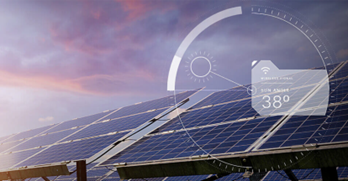
The Good Future Solar Tracking Control System is designed to keep every solar module perfectly aligned with the sun — all day long.
Turning every ray of sunlight into clean, efficient energy. The Good Future Solar Tracking Control System ensures every solar module remains perfectly aligned with the sun all day long. Through real-time position correction and high-precision astronomical algorithms, your solar farm can achieve maximum sunlight absorption and superior overall system performance.
| Feature | Specification |
|---|---|
| Tracking Range | ±60° |
| Tracking Accuracy | ±1° (algorithmic precision < ±0.05°) |
| Solar Positioning | Real-Time Azimuth & Altitude Correction |
| Algorithm | Embedded Bourges + Wang Hybrid |
Our intelligent controller adapts automatically to any site, ensuring continuous, stable operation under all conditions — from deserts to coastal regions. Ideal for both utility-scale solar farms and distributed PV installations, it delivers consistent efficiency, longevity, and operational safety.
Smart. Stable. Powerful.
Good Future Solar — your partner in maximizing solar energy potential.
Why It Matters: High-precision solar tracking reduces shading, optimizes module tilt dynamically, and increases daily and seasonal energy harvest.
Contact Good Future New Energy today to learn more about our tracking solutions for your PV project.